
31°C, New York


Notification products, updates
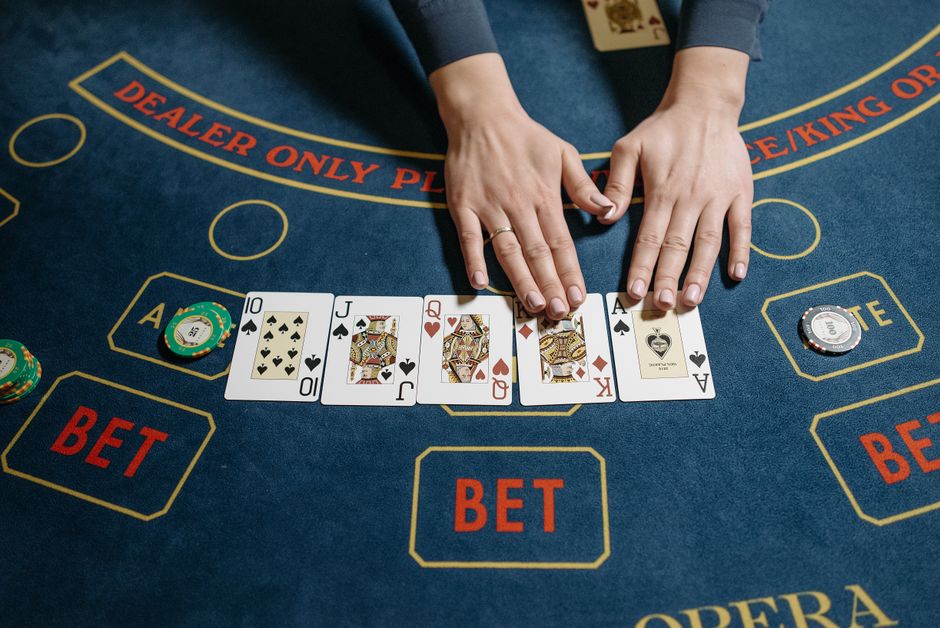
Ask ten gamblers why they play and you'll get ten different answers. The thrill of a jackpot, the mental chess of poker, the comfort of a familiar slot machine, the sweat of a last-minute parlay. But ask them how the games actually work underneath, and most will shrug. That gap between experience and understanding is exactly where money quietly changes hands. So let's close it.
This isn't a lecture on why you shouldn't gamble, and it isn't a hype piece promising a system that beats the house. It's a working knowledge guide for anyone who logs into an online casino, fires up a poker client, or puts a few bucks on the weekend games. If you've been playing on instinct alone, a little mechanical understanding goes a long way.
Every casino game has a built-in mathematical advantage for the operator. It's called the house edge, and it's expressed in reverse for slots as RTP, or Return to Player. An RTP of 96% means that over millions of spins, the machine returns 96 cents of every dollar wagered and keeps 4. On paper that sounds close to fair. In practice, a 4% edge chews through a bankroll much faster than most players expect, especially because results swing wildly in the short term. Take a look at สล็อตเว็บตรง for a fuller picture.
Here's the part that trips people up: RTP is a long-run average, not a promise about your session. A slot can pay out 96.2% across ten million spins and still go cold for two hours. This is variance, and it's why two players with the same strategy can have completely opposite nights.
A quick practical tip: most reputable casinos publish RTP for each game in the info panel. If they don't, that alone tells you something. Some jurisdictions like the UK require it. If you're chasing gaming value, the top of the RTP charts usually sits around 97% for certain jackpot-slot variants, though jackpot contributions often eat into that.
Unlike slots, poker pits you against other people, not the house. The casino takes a rake, typically 5% of each pot capped at a few dollars, and that's their cut. Everything else depends on how well you play relative to your table. This is why poker is the only mainstream iGaming vertical where a disciplined player can genuinely be a long-term winner.
But "skilled" doesn't mean immediate profit. Even the best no-limit hold'em players go on losing streaks of 20,000 hands. New players consistently underestimate this. You can play perfectly for a week and lose. That's not bad luck deserved, it's just math with a heavy tail. Serious players manage this with bankroll rules, not gut feel.
One more thing: poker's social layer isn't decoration. Reading opponents, managing tilt, choosing the right tables, are all edge. Online, where you can't see faces, that edge shifts toward bet-sizing patterns and timing tells. It's a different game than live, but not a lesser one.
If you've ever wondered why bookmakers are so relaxed while you sweat a parlay, it's because their margin is baked into the odds. A fair coin flip pays even money. A bookmaker offering -110 on both sides of a near-50/50 event is charging you about 4.5% to play. That's called the vig, or juice. Over a hundred bets, it's meaningful.
Beating that margin requires either genuine predictive skill or line shopping. Most recreational bettors have neither. The smart ones, even without deep statistical models, know two things: shop for the best price across multiple books, and never parlay for the sake of a big payout. Same-game parlays, in particular, are heavily juiced. They're marketed hard for a reason.
A few practical principles worth internalizing:
Online casinos have matured fast. Live dealer games stream real tables with real croupiers, blended with digital overlays for bet placement. Crash games and provably fair crypto titles introduced a transparency model where players can verify each result cryptographically. Payments run through e-wallets, instant bank transfers, and increasingly, stablecoins. Bonus structures are more aggressive than anything physical casinos ever offered, though the terms have grown equally aggressive.
What hasn't changed is the operator's mathematical edge. The décor is nicer, the load times are instant, and the promotions flash louder, but the underlying model is identical. Understanding that is your actual defense.
None of this is about moralizing. It's about playing with clear eyes instead of assumptions. A shortlist worth remembering: treat gambling as entertainment spend, not an investment. Set loss limits before you log in, not after the first bad session. Ignore "hot" and "due" narratives; every spin is independent. If you're chasing promotions, do the rollover math in advance. And if the game stops being fun, walk away without needing to recoup.
The house edge is real. Variance is real. And so is the pleasure of a well-played hand or a perfectly timed bet. The two are not contradictory. The players who last aren't the ones chasing flukes; they're the ones who understand the table they're sitting at, digital or otherwise, and act accordingly. That's the whole game, and the only edge you can genuinely carry in your pocket.

Champagne Cars shares practical, down-to-earth guidance on luxury chauffeur and prestige car hire for readers across the UK.
Stay Tuned With Updates


Leave A Comment